
By Lucky Akoza
The Niger Delta Civil Society Forum (NDCSF) has written an open letter to President Bola Ahmed Tinubu, raising grave constitutional concerns over what it described as the illegal and unconstitutional implementation of the 13 per cent Derivation Fund in Nigeria.
In the open letter, signed by its Coordinator, Comrade Ezekiel Kagbala, the Forum said it was compelled to speak out “in the spirit of patriotism, constitutionalism, and justice,” warning that the prevailing practice undermines the supremacy of the 1999 Constitution (as amended) and continues to shortchange oil-producing communities of the Niger Delta.
The NDCSF noted that oil and gas matters are expressly listed under Item 39 of the Exclusive Legislative List in Part I of the Second Schedule to the Constitution, covering mines and minerals, including oilfields, oil mining, geological surveys and natural gas.
According to the Forum, by the doctrine of separation of powers, only the Federal Government acting through the President has jurisdiction over matters on the Exclusive Legislative List, stressing that state governors and state assemblies lack constitutional authority to legislate on, administer, or appropriate funds derived from oil and gas resources.
“Yet, for over thirty years, governors of oil- and gas-producing states and their state assemblies have exercised control over derivation funds,” the Forum stated, describing the practice as persistent constitutional overreach and illegality.
The NDCSF further cited Section 162(2) of the 1999 Constitution, which provides that the principle of derivation shall be “not less than thirteen per cent of the revenue accruing to the Federation Account from any natural resources.”
It argued that in the derivation principle, the 13% Derivation Fund is a first-line charge on the Federation Account, constitutionally set aside before the remaining 87 per cent is shared among the Federal, State and Local Governments.
“In law and practice, first-line charges are paid directly to beneficiaries. The Federal Government is a second-line charge, states third-line, and local governments fourth-line,” the Forum explained.
“However, the current practice of handing the 13% Derivation Fund to state governors to administer has no constitutional foundation and undermines transparency, accountability, and the intent of the Constitution.”
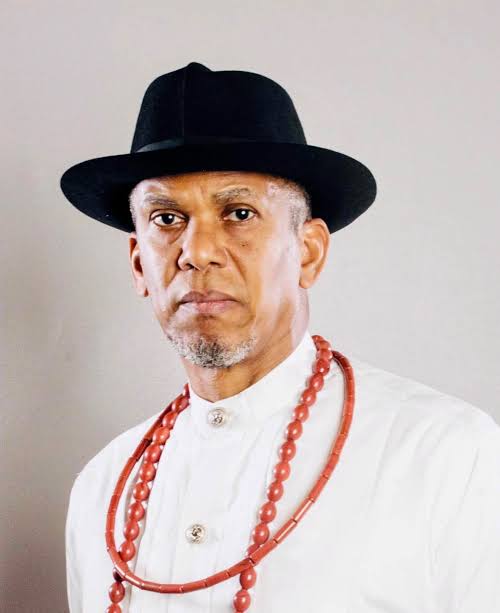
The Forum also recalled that when Chief Dr. Wellington Okrika, popularly known as “Mr. 13 Per Cent,” spearheaded the historic struggle for the derivation principle, state governors were not part of that agitation.
According to the NDCSF, no compensation or formal recognition was ever accorded to Chief Okrika, despite his central role in advancing the derivation principle that oil-producing states now benefit from.
“The present mindless abuse of the derivation principle by political actors who neither fought for it nor respect its constitutional foundations is unjust, morally troubling, and capable of attracting international intervention if allowed to continue unchecked,” the Forum warned.
To further support its position, the NDCSF referenced constitutional precedents. It recalled that under President Shehu Shagari, when derivation stood at 1.5 per cent, the funds were not disbursed to governors but managed through presidential oversight and monitoring structures.
Similarly, the Forum noted that when General Ibrahim Babangida increased derivation to 3 per cent, he established OMPADEC to centrally administer the funds, in recognition of oil and gas being on the Exclusive Legislative List.
“These actions respected constitutional boundaries and provide clear models for lawful and transparent administration,” the letter stated.
The NDCSF expressed concern over what it described as persistent silence by federal authorities despite repeated submissions of documents and constitutional references on the matter.
In its appeal, the Forum urged President Tinubu to issue an Executive Order to correct the alleged anomalies by ensuring lawful administration of the 13% Derivation Fund. This, it said, should include the establishment of a 13% Derivation Fund Board in each oil- and gas-producing state and the constitution of a Presidential Monitoring Committee to guarantee transparency, accountability, and strict constitutional compliance.
“This appeal is not political; it is constitutional. It is not adversarial; it is corrective,” the Forum stressed, warning that continued unconstitutional handling of the Derivation Fund “undermines the rule of law and deprives host communities of the justice the Constitution guarantees them.”
The group said it trusts in President Tinubu’s commitment to constitutionalism and reform and expresses hope for decisive action that will finally align the implementation of the 13% Derivation Fund with the letter and spirit of the Constitution.