By Moses Darah
*OKUAMA: VOTES WITHOUT JUSTICE*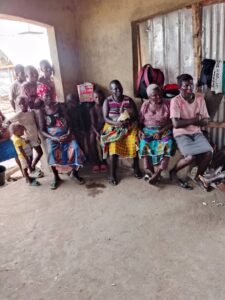
Okuama is a name that still echoes with pain. It is a community in Ughelli South Local Government Area of Delta State marked by grief, displacement, destruction, hunger, lack of basic amenities and the continued detention of its leaders without trial. Yet, despite the scars it bears, Okuama remains part of Nigeria’s democratic map. There are polling units in Okuama. Ballot boxes would be allocated to it by INEC in the 2027 general elections. Voter registers carry the names of its people.
And before the end of 2026 and early 2027, politicians will return.
They will arrive with convoys, slogans, promises, bags of salt and rice. They share N5,000 each to the youth and the eghweya, wrappers. They will mount podiums and speak of democracy, inclusion, and development. They will ask for votes from the same people whose leaders have been held in military custody for years without due process, whose community has suffered collective punishment, and whose cries for justice have been met with silence.
This contradiction exposes a deep moral failure in our political culture. Okuama is remembered when votes are needed, but forgotten when justice is demanded. Its people are good enough to vote, but not important enough to be heard. Their ballots are valued, but their dignity is negotiable.
Democracy is not merely about elections; it is about rights, accountability, and the rule of law. A system that eagerly counts votes from Okuama while ignoring court orders concerning its detained leaders is not practicing democracy. It is exploiting it. Elections without justice are empty rituals, and participation without protection is a dangerous illusion.
The continued detention of Prof. Arthur Ekpekpo and other Okuama leaders has turned the idea of citizenship on its head. What does it mean to belong to a nation where your leaders can be held indefinitely without trial, yet you are still expected to line up under the sun to validate the same system with your vote?
As 2027 approaches, this question will haunt the conscience of Nigeria. Politicians must be reminded that votes are not charity gifts from suffering communities; like Esaba and Otutuama without roads. They are expressions of trust. And trust cannot survive where injustice is institutionalised.
If Okuama truly belongs to Nigeria, then its people deserve justice, transparency, and respect; not just ballot papers. Until that happens, every vote sought there will stand as a silent indictment of a democracy that remembers its citizens only when it needs their votes.
Okuama has polling units. Yes. But more importantly, Okuama has rights.