By Andrew Darah
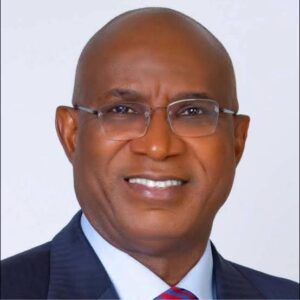
Otiti, who openly stated that he is not a political supporter of Omo-Agege, noted that his commendation was not driven by partisanship but by a sense of fairness and historical truth.
According to him, leadership demands acknowledgment when rare sacrifices are made in the interest of unity and equity.
The commentator recalled that Senator Omo-Agege, despite being Urhobo, facilitated the siting of the Federal University of Science in Kwale, Ndokwa Nation, rather than in any Urhobo community where such an institution could have easily been justified.
This decision, Otiti noted, marked the first major federal government presence in Ndokwa land, a region that has produced several senators under Delta North but had remained largely excluded from federal infrastructure of this magnitude.
He further observed that what successive political leaders, including governors from the region, failed to deliver for Ndokwa people was eventually realized through the intervention of an Urhobo senator, describing the move as a powerful example of being “one’s brother’s keeper.”
Otiti described the gesture as a defining moment in contemporary Delta politics, stressing that it transcends ethnic loyalty and represents a rare demonstration of statesmanship in Nigeria’s often divisive political landscape
.
He concluded by stating that while Senator Omo-Agege deserves commendation for the singular act, the praise also extends to the Urhobo people as a whole, whom he said have shown, through this action, a commitment to inclusiveness and shared progress.