By Lucky Uto
Protesters from Ndokwa Nation on Wednesday took a swipe at Delta State Deputy Governor, Monday Onyeme, accusing him of failing to deliver on assurances that electricity would be restored to the area.
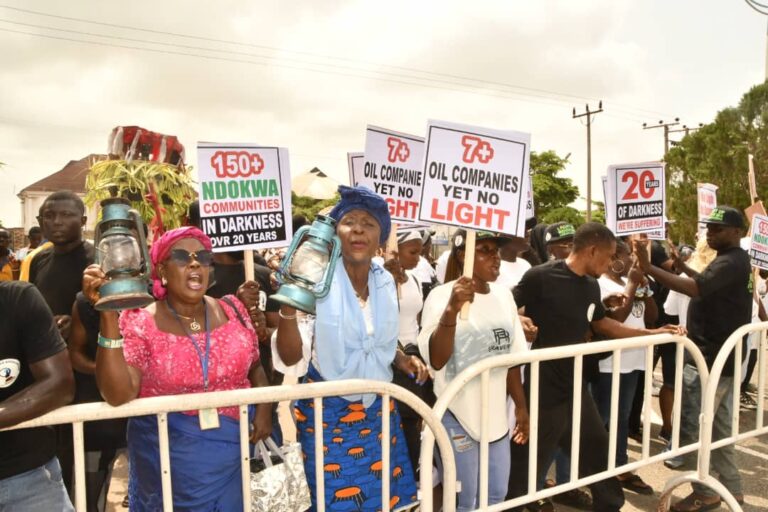
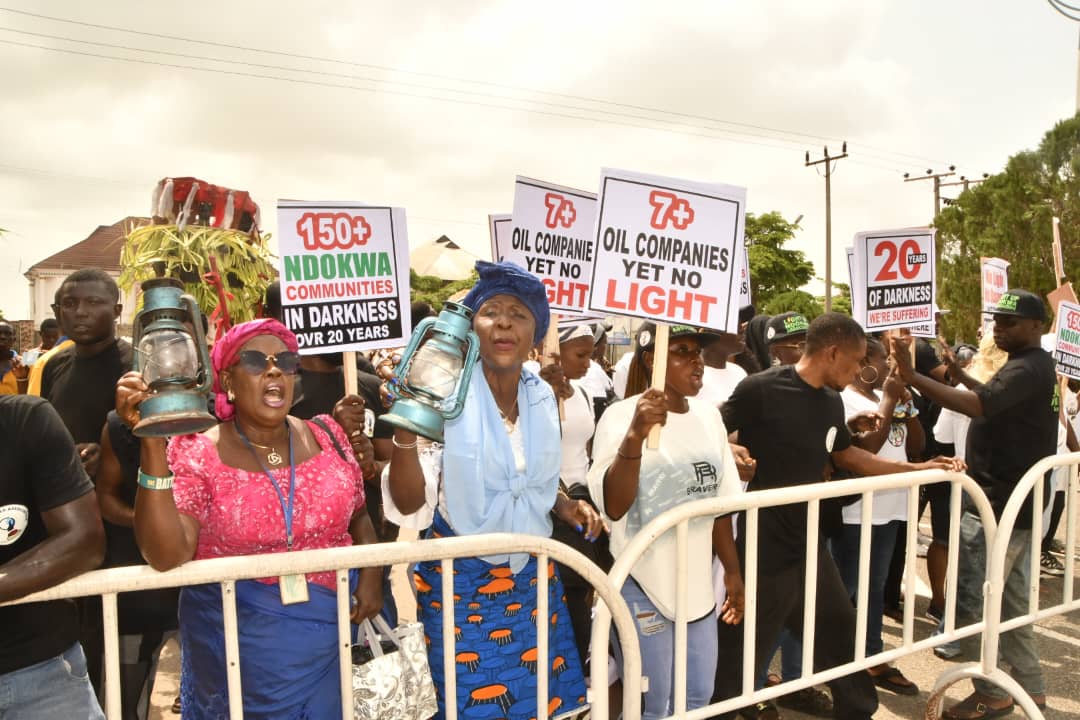
The protesters, led by President of the Light Up Ndokwa Association, Comrade Stanley Adoh, made the remarks while demonstrating at the Delta State Government House in Asaba over the prolonged blackout in the oil- and gas-rich region.
Adoh said the Deputy Governor, who hails from Ndokwa, had personally assured residents that power would be restored within a short timeframe, a promise he said has not been fulfilled.
“Our Deputy Governor, who is our brother, told us that within two months, there would be light. Up till now, nothing has happened,” Adoh said.
He described the situation as deeply disappointing, especially given the expectations placed on the Deputy Governor as a son of the soil.
“We have waited, we have endured, and we are tired of empty promises,” he added.
Adoh also cited similar assurances by other government officials, including the Commissioner for Information and Works, who he said promised that electricity would be restored before December.
“The Commissioner said before December there would be light in Ndokwa. Up till now, nothing has happened,” he said.
The protesters insisted that their demand remains unchanged—direct access to electricity from the Independent Power Plant (IPP) located in Ndokwa.
“We don’t need light from elsewhere when we have it in our backyard. What we need is for the IPP to be stepped down to Ndokwa communities,” Adoh stated.
He reiterated the community’s frustration over decades of neglect despite hosting major energy infrastructure.
“For over 20 years, there has not been light in Ndokwa Nation. Some communities have never seen electricity since their creation—not even poles or wires,” he said.
Adoh further warned that continued failure to address the issue could have political consequences.
“Tell the governor that if the IPP is not stepped down and we have light in Ndokwa Nation, we will not vote for them—there will be no vote in Ndokwa Nation,” he declared.
Responding on behalf of the governor, Chief of Staff, Prince Johnson Erijo, acknowledged the concerns and addressed the issue of the Deputy Governor’s earlier assurances.
“When the Deputy Governor made those statements, he did so based on the information available at the time. Governance is dynamic, and processes can change,” Erijo said.
He emphasized that delivering electricity involves regulatory and technical procedures that take time, noting that the state government has already taken steps, including passing a law to establish an electricity regulatory commission and engaging consultants to handle the process.
Erijo also appealed for patience, stressing that the Deputy Governor and other leaders from Ndokwa are equally affected by the situation.
“No one benefits from the current situation. Even the Deputy Governor bears the cost of running generators when he is in his village,” he said.
He assured the protesters that the administration of Governor Sheriff Oborevwori remains committed to resolving the electricity challenge in Ndokwa and across the state.